
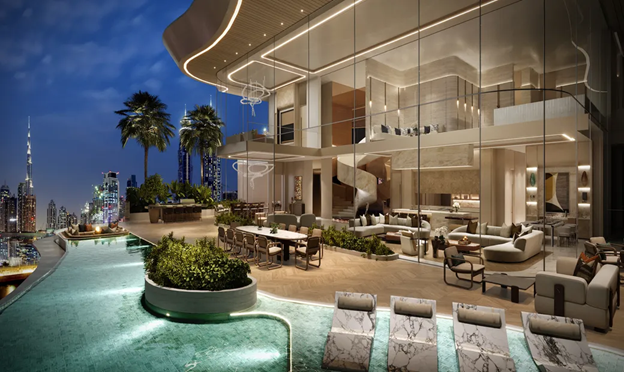
Dubai’s real estate sector stands as a calculated blend of global ambition and disciplined execution. It attracts investors who value structure, transparency, and long-term appreciation. The city’s skyline reflects more than architectural creativity; it signals a market built on strategic planning, regulatory clarity, and sustained international demand.
Within this evolving framework, high end real estate in Dubai represents a segment defined by precision rather than excess. It includes curated developments, waterfront residences, and branded living spaces designed for a global audience. Buyers entering this space are not simply acquiring property; they are securing assets aligned with long-term financial positioning and lifestyle intent.
Defining the Structure of Dubai’s Luxury Market
Dubai’s premium property segment operates within a clearly defined ecosystem where planning plays a central role. Developments are rarely standalone; they are integrated into larger master communities that combine residential, commercial, and leisure elements. This layered approach ensures long-term sustainability and consistent demand.
Such structuring also influences pricing stability. Properties within planned communities benefit from maintained infrastructure, controlled density, and consistent service standards. As a result, these assets tend to retain value more effectively compared to fragmented developments lacking cohesive planning.
Master-Planned Community Framework
Large-scale developments are designed with a long-term vision that includes transport connectivity, green spaces, and retail integration. This planning approach enhances livability while strengthening the asset’s long-term appeal. Buyers recognize the advantage of investing in environments that evolve in a structured manner.
Consistency in Development Standards
Premium projects adhere to strict construction and design benchmarks, ensuring uniform quality across units. This consistency supports both resale value and rental demand. Investors often prioritize developments where quality control is visibly maintained across phases.
Prime Locations That Anchor Market Value
Location continues to play a decisive role in shaping property demand across Dubai’s luxury segment. However, the definition of a prime location extends beyond geography. It includes accessibility, surrounding infrastructure, and the ability to deliver a complete lifestyle experience.
Districts that combine business proximity with leisure offerings consistently outperform others. These areas attract both end-users and investors, creating a balanced demand cycle that supports pricing strength and long-term appreciation.
Coastal Developments and Water Views
Residences positioned along the coastline offer both visual distinction and limited supply. These properties benefit from sustained demand due to their exclusivity. Buyers often view them as stable assets with strong long-term positioning.
Central District Accessibility
Properties located near financial hubs and commercial centers maintain high occupancy rates. Their accessibility enhances usability for both residents and tenants. This factor contributes directly to rental yield consistency.
Investment Approaches for High-Value Buyers
Strategic investment in Dubai’s premium market requires a clear understanding of timing, asset selection, and financial structuring. Buyers often enter the market with defined objectives, whether focused on capital appreciation, rental income, or portfolio diversification.
Balancing different asset types is a common approach. Investors combine ready-to-move properties with off-plan opportunities to manage liquidity and growth potential. This strategy allows them to adapt to changing market cycles without overexposure.
Interpreting the Value Behind Premium Properties
Understanding what drives value in Dubai’s luxury segment requires a broader perspective. Pricing is influenced by design quality, developer reputation, and community integration rather than size alone. Buyers assess these elements collectively before making decisions.
Long-term value is also tied to future infrastructure developments. Projects located near upcoming transport links or commercial expansions often experience stronger appreciation. This forward-looking approach shapes investment decisions across the segment.
The Role of Advisory in Strategic Decisions
Professional guidance plays a critical role in navigating Dubai’s real estate landscape. Advisors provide structured insights that help buyers align their investments with market conditions and personal objectives. Their involvement reduces uncertainty and improves decision accuracy.
Beyond property selection, advisory services extend to negotiation, legal processes, and transaction management. This comprehensive approach ensures that buyers operate with clarity at every stage, minimizing risks associated with high-value transactions.
Market Intelligence and Data Analysis
Advisors rely on detailed market data to identify trends and opportunities. Their insights help clients understand pricing movements and demand patterns. This analytical approach supports informed decision-making rather than reactive choices.
Transaction Structuring and Compliance
Navigating legal frameworks and documentation requires precision. Advisors ensure that transactions comply with regulatory requirements while protecting client interests. Their involvement streamlines processes that might otherwise become complex.
Design, Lifestyle, and Buyer Expectations
Luxury in Dubai is increasingly defined by experience rather than scale. Buyers expect residences that integrate functionality, design, and lifestyle elements seamlessly. This shift has influenced how developers conceptualize new projects.
Modern developments emphasize wellness facilities, smart technology, and curated amenities. These features enhance daily living while supporting long-term value. As expectations evolve, properties that align with these preferences gain stronger market traction.
Architectural Identity and Detailing
Design plays a central role in differentiating premium properties. Developments often collaborate with international architects to deliver distinctive structures. This focus on identity enhances both visual appeal and market positioning.
Lifestyle-Oriented Amenities
Amenities are designed to support convenience and exclusivity. Features such as concierge services, fitness centers, and private lounges contribute to the overall living experience. These elements influence both buyer decisions and rental demand.
Market Direction and Emerging Trends
Dubai’s real estate market continues to adapt to global shifts and regional growth strategies. Sustainability, digital integration, and branded collaborations are shaping the next phase of development. These trends reflect changing buyer expectations and regulatory priorities.
Energy-efficient construction and smart home systems are becoming standard features in new projects. These elements improve usability while aligning with long-term environmental considerations. Investors increasingly factor these aspects into their evaluation process.
Final Thoughts
What truly defines success in a market built on precision, scale, and global demand? The answer lies in selecting the right opportunities with clarity and confidence. ALV Global Properties operates within this framework by offering access to curated developments, structured advisory, and a deep understanding of market dynamics.
For investors seeking direction in a competitive landscape, partnering with the best real estate agency in UAE creates a measurable advantage. The right expertise ensures that every decision is aligned with long-term value, transforming property acquisition into a strategic and well-executed investment.